47
Sanskrit:
निश्चिन्ता निरहङ्कारा निर्मोहा मोहनाशिनी ।
निर्ममा ममताहन्त्री निष्पापा पापनाशिनी ॥ ४७ ॥
English:
niścintā nirahaṅkārā nirmōhā mōhanāśinī |
nirmamā mamatāhantrī niṣpāpā pāpanāśinī ॥ 47 ॥
Tamil:
நிஶ்சிந்தா நிரஹங்காரா நிர்மோஹா மோஹநாஶிநீ ।
நிர்மமா மமதாஹந்த்ரீ நிஷ்பாபா பாபநாஶிநீ ॥ 47 ॥
Meaning:
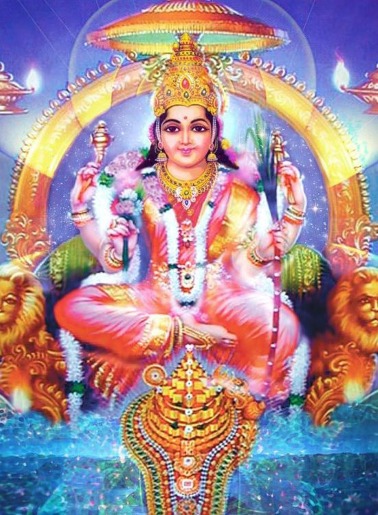
In this 47th verse, Śrī Lalitā appears as:
The embodiment of complete inner freedom, untouched by worry, ego, delusion, possessiveness, or karmic stain. Here Lalitā is revealed both as the perfectly liberated Reality and as the active liberator of the seeker.
- As Niścintā, She is free from worry, deception, duplicity, and anxiety — and removes all mental unrest from the devotee.
- As Nirahaṅkārā, She dissolves the false sense of “I” and the pride of doership, restoring humility, harmony, and bodily well-being.
- As Nirmohā / Mōhanāśinī, She removes mental intoxication, illusion, and confusion, granting clear perception, calmness, and right conduct.
- As Nirmamā / Mamatā-hantrī, She cuts the deep-rooted knot of possessiveness — the “this is mine” idea — transforming attachment into free, mature love and resolving conflicts, especially around relationships and property.
- As Niṣpāpā, She stands beyond sin and karmic stain, restoring moral clarity and relieving recurring suffering.
- As Pāpanāśinī, She actively destroys karmic burdens and past negativities, preparing the right sūzhal (conditions) for obstacles to dissolve and life to realign.
Thus, Lalitā is shown here as the inner purifier — not merely removing faults, but transforming the very field of the mind and heart.
She does not suppress emotions or judge mistakes. She clarifies, cleanses, and liberates.
Meditation:
This verse invites the seeker to rest in the Mother’s fearless tranquility and cleansing grace.
Meditating on Lalitā as Niścintā, the mind releases worry, anxiety, and fear. Reflecting on Her as Nirahaṅkārā, the weight of ego and self-importance softens, bringing humility and inner ease.
Contemplating Her as Nirmohā / Mōhanāśinī, mental confusion dissolves, perception becomes clear, and the heart regains calm balance.
As Mamatā-hantrī, She gently severs possessiveness and emotional clinging, allowing love to exist without bondage.
As Niṣpāpā and Pāpanāśinī, Her grace washes away karmic residue, guilt, and recurring suffering, reminding us that purification is always possible.
Through this verse, Lalitā becomes the inner alchemist:
- fear transforms into peace
- ego transforms into humility
- attachment transforms into freedom
- confusion transforms into clarity
- karmic burden transforms into lightness
This is the Mother who liberates not by force, but by illumination and compassion.
Sanskrit: निश्चिन्ता
Tamil: நிச்சிந்தா
Meaning: She who is free from worry, deception, and inner conflict.
Reflection: As Niścintā, She embodies divine ease — a peace born not of ignorance, but of complete awareness. Her presence dissolves fear, clears confusion, and restores trust.
Contemporary Reflection: In a world filled with stress, uncertainty, and manipulation, Niścintā teaches us to live with: • calm confidence, • inner honesty, • emotional transparency, • and faith in the natural order of life. Her grace allows us to act without anxiety and receive without fear.
Meditation: “I honor Niścintā, the worry-free Mother of truth, who removes all anxiety and deception, and fills my life with peace and auspiciousness.”
Sanskrit: निरहंकारा
Tamil: நிரஹங்காரா
Meaning: She who is free from ego, pride, and the sense of individual doership. As Nirahaṃkārā, She is the purity beyond all personal identity.
Reflection: As Nirahaṃkārā, She teaches that true greatness lies in egolessness. When the “I” dissolves, the Divine flows freely. Her presence removes inner friction and restores harmony.
Contemporary Reflection: In modern life, ego often appears as: • constant self-comparison, • the need to be right, • craving recognition, • emotional defensiveness. Nirahaṃkārā gently dissolves these patterns, allowing authenticity, humility, and peace to emerge. She helps us act from truth, not from the need to prove ourselves.
Meditation: “I bow to Nirahaṃkārā, the egoless Mother, who dissolves my false identity, restores harmony to my body and mind, and leads me to quiet inner greatness.”
Sanskrit: निर्मोहा
Tamil: நிர்மோஹா
Meaning: She who is free from delusion, illusion, and mental intoxication. As Nirmohā, She is the clear light of awareness that cuts through ignorance.
Reflection: As Nirmohā, She removes confusion born of desire, fear, and illusion. Her clarity allows us to see things as they are, not as we imagine them.
Contemporary Reflection: In modern life, delusion appears as: • over-attachment, • impulsive decisions, • emotional bias, • attraction without discernment. Nirmohā restores clarity, calmness, and inner stability. She gives courage to face truth without fear.
Meditation: “I honor Nirmohā, the Mother of clear vision, who removes confusion, steadies my mind, and guides me toward truth and right conduct.”
Sanskrit: मोहनाशिनी
Tamil: மோகனாசினி
Meaning: She who destroys illusion and enchantment.
Reflection: As Mohanāśinī, She liberates souls from the traps of fascination and fantasy.
Contemporary Reflection: She helps us break free from distractions and false appearances.
Meditation: “I bow to Mohanāśinī, the dispeller of illusion, who restores clarity to my path.”
Sanskrit: निर्ममा
Tamil: நிர்மமா
Meaning: She who is free from possessiveness.
Reflection: As Nirmamā, She embodies selfless love untainted by ownership or control.
Contemporary Reflection: She teaches generosity of spirit and the freedom that comes from letting go.
Meditation: “I honor Nirmamā, the unattached one, who frees my heart from possessiveness.”
Sanskrit: ममता-हन्त्रि
Tamil: மமதா-ஹந்த்ரி
Meaning: She who destroys possessive attachment and ego-driven ownership.
Reflection: As Mamatā-hantrī, She teaches that love does not mean possession. True love allows space, freedom, and trust. Her presence transforms attachment into compassion.
Contemporary Reflection: In modern life, possessiveness often appears as: • emotional dependency, • fear of loss, • controlling behavior, • conflicts over property or inheritance. Mamatā-hantrī dissolves these patterns, bringing maturity, balance, and peace. She helps us love deeply without binding.
Meditation: “I bow to Mamatā-hantrī, the Mother who removes possessiveness, teaches me to let go of ‘mine-ness’, and fills my relationships with free, wise love.”
Sanskrit: निष्पापा
Tamil: நிஷ்பாபா
Meaning: She who is sinless and untouched by wrongdoing.
Reflection: As Niṣpāpā, She is not merely sinless — She is the power that frees us from the effects of sin. Her presence restores innocence, clarity, and right discernment.
Contemporary Reflection: In daily life, Her grace manifests as: • moral clarity, • freedom from recurring suffering, • strength to choose right over wrong, • relief from guilt and fear, • and a lighter, happier life path. She does not judge — She corrects, cleanses, and uplifts.
Meditation: “I honor Niṣpāpā, the sinless Mother, who removes karmic burden, ends recurring suffering, and fills my life with clarity and goodness.”
Sanskrit: पापनाशिनी
Tamil: பாபநாசினி
Meaning: She who destroys illusion and enchantment.
Reflection: As Pāpanāśinī, She does not punish —She purifies. She burns ignorance, releases guilt, and replaces heaviness with clarity and peace.
Contemporary Reflection: She reminds us that: • healing is always possible • repentance leads to renewal • no burden is permanent • grace works when effort is sincere Through discipline, devotion, and awareness, She transforms suffering into strength.
Meditation: “I bow to Pāpanāśinī, the Mother who destroys karmic suffering, removes all obstacles, and prepares the divine conditions for my life to unfold in harmony.”
Audio courtesy of The Sanskrit Channel
Video courtesy of Sri Sankara TV YouTube channel